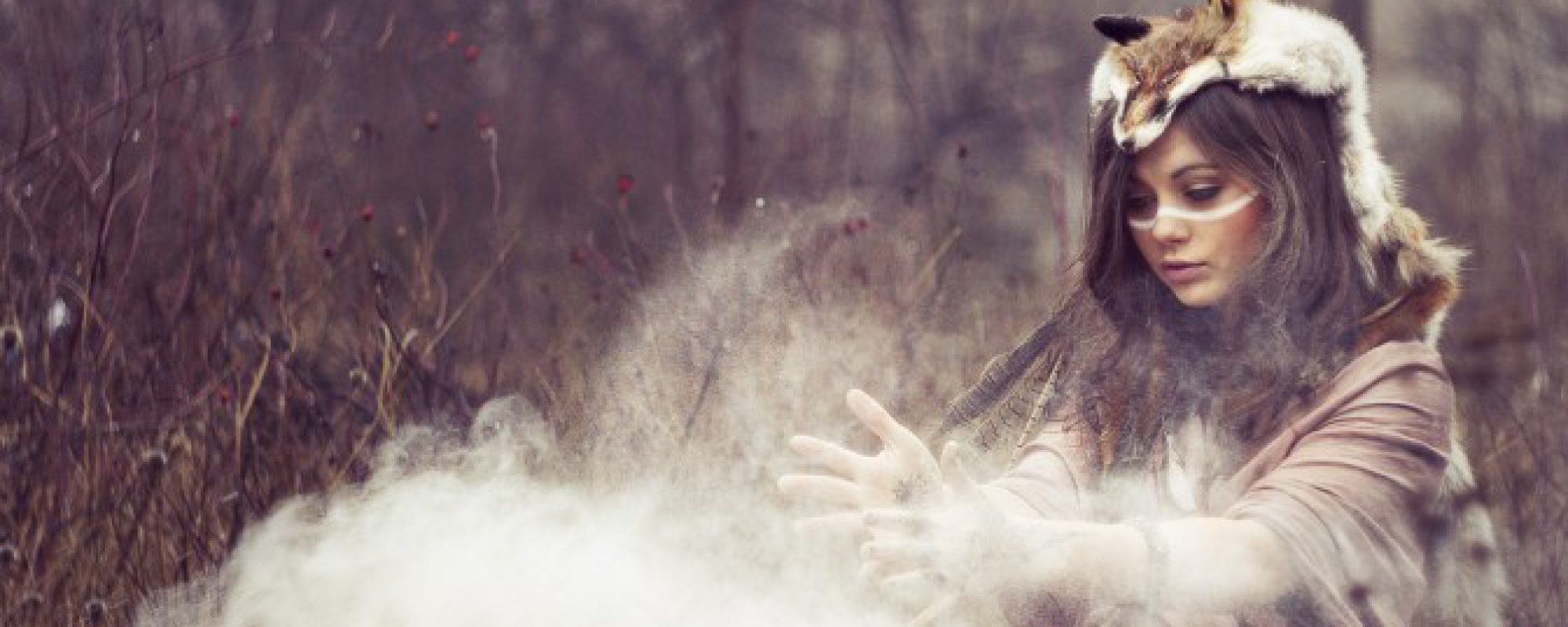

“Because it is not an organized religion as such, but rather a spiritual practice, shamanism cuts across all faiths and creeds, reaching deep levels of ancestral memory. As a primal belief system, which precedes established religion, it has its own symbolism and cosmology, inhabited by beings, gods, and totems, who display similar characteristics although they appear in various forms, depending upon their places of origin.”
~John Matthews, The Celtic Shaman
What is shamanism?
Shamanism is a spiritual practice found in cultures around the world from ancient times up to the present day. First and foremost, shamans’ practices are practical and adaptable. These practices coexist over millennia with varying cultures, systems of government, and organized religious practices.
Many formalized religions, from Buddhism to Christianity, came from ancient shamanic roots and still bear the shamanic threads of deep connection to the divine in all things. But shamanism itself is not a formalized system of beliefs or an ideology. Rather, it is a group of activities and experiences shared by shamans in cultures around the world. These practices are adaptable and coexist with different cultures, systems of government, and organized religious practices.
Individual practice
Nowadays, in non-indigenous cultures, shamanism is studied and practiced as a life path. Following a shamanistic perspective, individuals seek to be in relationship with the spirit in all things. They seek to use information and guidance from non-ordinary reality to intentionally form their own life experience.
This perspective is not inherently contradictory of any religious practice that allows a person to be in direct relationship with whatever they perceive as a higher power.
Consulting with shamans
Just as in ancient times, contemporary people consult with modern day shamanic practitioners for practical and pragmatic solutions to problems in everyday life-from personal illness, professional challenges, or family discord to ancestral issues.
Shamans work in voluntary, ecstatic trance states, which alter their consciousness to travel to the realms of the invisible worlds. Their ability to gain information and make changes in the invisible realms is dependent upon the working relationships they develop with spirits there. In this sense, shamanism is a relationship-based practice of making changes in invisible realms to impact healing, of individuals or communities, in the realm of ordinary reality.
For some peoples, such shamanic practice is part of their dominant culture, for others it is directly contradictory. Some individuals are intuitively guided to seek help from a contemporary shaman, often when other options have been exhausted, without even understanding what a shaman is or how they work.
What is a shaman?
According to famed American psychologist and consciousness pioneer, Stanley Krippner, shamans are “community-assigned magico-religious professionals who deliberately alter their consciousness in order to obtain information from the ‘spirit world.’ They use this knowledge and power to help and to heal members of their community, as well as the community as a whole.”
Krippner describes shamans as the first physicians, diagnosticians, psychotherapists, religious functionaries, magicians, performing artists, and storytellers.
In shamanistic cultures, all adults are responsible for their relationships with spiritual energies, including those of their home environment (geography, animals, and plant life,) their ancestors, their own personal helping spirits, and Spirit, the creator force.
However, the shaman is unique in that he or she not only has increased facility for traveling in non-ordinary realms, but also uses their spirit relationships to create changes that will manifest in the physical world, for the healing of individuals or the community. This definition differentiates shamans from other types of practitioners. For example, mediums use altered states of consciousness, but they do not take action in those altered states. And sorcerers take action in altered states, but not necessarily to heal.
Abilities of shamans
According to Christina Pratt in The Encyclopedia of Shamanism, a shaman is a practitioner who has gained mastery of:
- Altered states of consciousness, possessing the ability to enter alternated states at will, and controlling themselves while moving in and out of those states.
- Mediating between the needs of the spirit world and those of the physical world in a way that can be understood and used by the community.
- Serving the needs of the community that cannot be met by practitioners of other disciplines, such as physicians, psychiatrists, priests, and leaders.
A shaman is therefore a specific type of healer who uses an alternate state of consciousness to enter the invisible world, which is made up of all unseen aspects of the world that affect us, including the spiritual, emotional, mental, mythical, archetypal, and dream worlds.
Categories of healers
There are three categories of contemporary shamans, including those who:
- Come from an unbroken shamanic tradition and continue to practice in that tradition, usually in their native culture.
- Come from a shamanic tradition, but serve to bridge between that tradition and the modern Western world, often by adding ceremonies and rituals that were not necessary in their indigenous culture.
- Are called by Spirit to serve the needs of their community as shamans, though they may be long separated culturally from their original shamanic roots.
How can shamanism benefit your health and wellbeing?
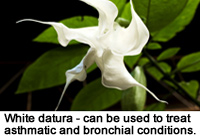 Individuals may seek shamanic healing for many different maladies. If they are living within a shamanic culture, shamanic healing is typically part of a multidisciplinary approach used for any disease or imbalance, in partnership with physical healers, botanical medicines, changes in diet, and other therapies.
In contemporary western society, shamanic healing is unfamiliar to most non-indigenous individuals. Despite that, people are finding their way to contemporary shamans for all types of health challenges, but especially when they are not making satisfactory improvements with conventional approaches.
Shamanistic perspective on disease
The perspective on individual disease is different in shamanism than in the conventional medical view. In a shamanistic view:
- Similar symptoms or diseases do not stem from the same underlying root energetic problem.
- Community disharmony often manifests in individual illness.
- Any illness may have a significant underlying spiritual or energetic issue, regardless of the form in which that illness manifests – physical, mental, emotional, spiritual, or relational.
Certain illnesses are more likely to have a spiritual component that may respond to shamanic healing techniques. These include psychological diagnoses like depression and anxiety, ADD/ADHD, autism, and addictions.
Illnesses that manifest physically may still have significant spiritual underpinnings. This is especially true for illnesses that have atypical or premature presentations, such as a degenerative illness that normally occurs in elder years occurring in a young adult.
The sense that something is “missing” or that “I haven’t been the same since…” can often be indicative of an energetic loss of some type, including soul energy loss. Shamanic healing is often part of a multi-pronged approach to an illness, and is fully compatible with both conventional medicine and other integrative treatments, such as Traditional Chinese Medicine, homeopathy, naturopathy, chiropractic, and others.
Shamanistic healing
Shamanic healing work requires two distinct phases:
- The accurate diagnosis of the seen and unseen energies at the root of the problem.
- Carrying out the specific choreography of energies needed to resolve the problem.
The shaman may serve by removing energies that are inappropriately present, or by returning energies that have been lost. This includes soul recovery to accomplish healing via the return of lost parts of the soul.
When an individual is living within a community that supports such work, there is time and support for the integration and processing that an individual must do to complete most healing processes. In contemporary society, the shaman and the client must create the resources and structure for the individual to adjust to the shift in internal energies.
Shamans direct and move energy to restore the harmony within the individual, between the individual and the community, and between the community and the spirit world.
You can find this full article at:
https://www.takingcharge.csh.umn.edu/explore-healing-practices/shamanism


 Akasha Shamanka